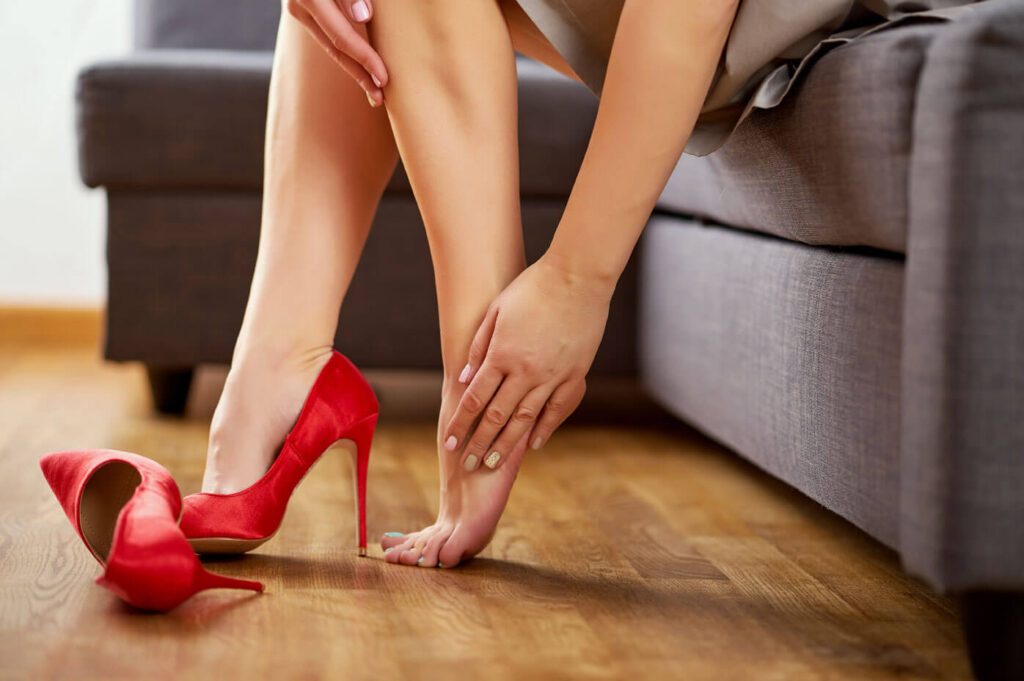
High heels can contribute to back pain for some people. Raising the heel shifts your weight forward and changes the natural alignment of your feet, hips, and spine, which can increase strain on the lower back and the muscles that support it. Occasional wear may cause little trouble, but frequent or prolonged wear can add up.
How Heels Change Your Posture
When your heel is lifted, your body adjusts to stay balanced. Common changes include:
- Increased arch in the lower back, which can tighten the muscles along the spine
- Forward tilt of the pelvis, shifting load to the lumbar joints
- Shortened calf muscles and tight hip flexors over time
- Less stable footing, which makes the back muscles work harder to keep you upright
These adjustments may lead to muscle fatigue, stiffness, or aching at the end of the day. Not everyone is affected the same way, and research on heels and chronic back pain is mixed, so your own comfort is a useful guide.
Ways to Reduce the Strain
You do not have to give up your favorite shoes entirely. Small choices can help:
- Choose lower, wider heels over tall, narrow ones; block heels are generally steadier than stilettos
- Save the highest pairs for short events and carry comfortable shoes for the commute
- Look for cushioned insoles and a snug fit with good arch support
- Alternate shoe styles through the week so your body is not held in one position
- Take breaks to sit, stretch, and walk in flat shoes
Strengthen and Stretch
A few habits can help your back handle daily demands. Gentle calf and hip flexor stretching can offset shortening from heel wear, and core and glute strengthening supports your spine. Our physical therapy team can design a program tailored to you and show you how to move and stand in ways that reduce strain. Our spine health resources also offer everyday tips for protecting your back.
When Pain Points to More Than Shoes
Shoes are only one possible factor. Back pain that continues after you change footwear may come from a disc problem, joint irritation, or nerve compression. Pay attention if you notice pain that radiates into your buttock or leg, tingling, numbness, or weakness. These symptoms suggest the nerves may be involved and are worth evaluating.
A spine evaluation looks at your whole picture: how you stand, move, and work, along with your symptoms and exam findings. In many cases the plan is conservative, such as therapy, activity changes, and better footwear. Most patients are not surgical candidates, and we only discuss procedures when they make sense for you.
When to Talk to a Specialist
If your back pain lingers even when you wear comfortable shoes, or if you notice numbness, tingling, or leg weakness, it is time to look deeper. NSC offers evaluation with board-certified neurosurgeons and a team of physician assistants, and new appointments are typically available within 10 days. Request an appointment and we will work with you on next steps.
This article is for general education and is not a substitute for a medical evaluation.