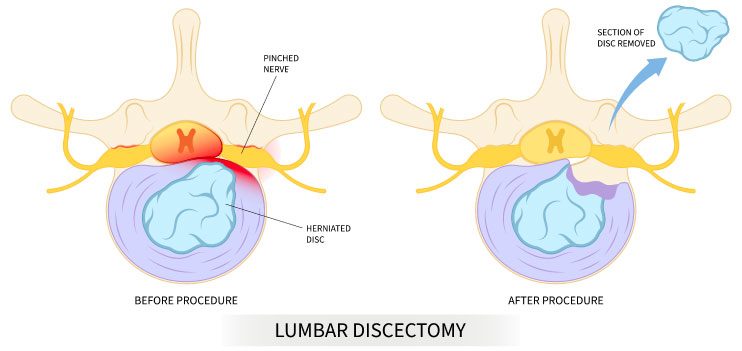
A discectomy is a surgical procedure that removes part of a damaged or herniated spinal disc that is pressing on a nerve. The goal is to relieve pressure on the nerve so symptoms such as leg or arm pain, numbness, or weakness may improve. It is typically considered only after conservative treatments have been tried, or sooner if nerve function is declining.
Why a Disc May Need to Be Treated
Spinal discs are cushions between the vertebrae. When the soft center of a disc pushes through its tougher outer layer, it can press on a nearby nerve. That is called a herniated disc, and it can cause sharp or radiating pain, tingling, or weakness in the arm or leg. Sciatica, pain that travels down the leg, is a common example in the lower back.
Most herniated discs improve over time with non-surgical care. You can read more about this condition on our herniated disc page.
Who May Be a Candidate
Your surgeon may discuss discectomy if:
- Arm or leg pain has continued despite weeks of conservative care
- Imaging shows a disc pressing on a nerve in a way that matches your symptoms
- You have noticeable weakness or worsening nerve function
- Symptoms significantly limit your daily activities
Sudden loss of bladder or bowel control, or numbness in the groin area, is an emergency and needs immediate medical attention.
What to Expect
A discectomy is often performed through a small incision, sometimes using minimally invasive techniques and a microscope for a clear view of the nerve. The surgeon removes the portion of the disc pressing on the nerve. Many patients go home the same day or after a short stay, though this depends on the individual.
Recovery usually involves a period of limited lifting and bending, a gradual return to walking and daily activity, and often a course of physical therapy to rebuild strength. Your surgeon will give you specific guidelines. Like any operation, discectomy carries risks, including infection, bleeding, and the possibility that a disc may herniate again, and your surgeon will review these with you.
To learn more about our approach, see our minimally invasive options.
Before surgery, you will review your medications, any blood thinners, and your overall health with your care team. Afterward, short walks are usually encouraged early on because gentle movement supports circulation and recovery. Keep in mind that the timeline for returning to work depends on how physically demanding your job is, so ask your surgeon what to expect. Attending follow-up visits allows your team to check your progress and answer questions as they come up.
When to Talk to a Specialist
If you have arm or leg pain that is not improving, or any weakness or numbness, it is worth having it evaluated. At Neurosurgery & Spine Consultants, our board-certified neurosurgeons evaluate, diagnose, and treat disc conditions, and most patients begin with a conversation about conservative options. Please request an appointment and together we can decide on the right path for you.
This article is for general education and is not a substitute for a medical evaluation.